Teen Driving: Tips for Parents and New Drivers
- Teen drivers benefit from mastering basics like defensive driving, smooth braking, and safe following distance.
- Parents play a key role by modeling safe habits, setting clear rules, and supporting professional instruction.
- California's licensing process includes phased steps with specific age requirements and driving restrictions.
Learning to drive marks a significant milestone in a teenager's life, bringing both excitement and responsibility. As a parent, your guidance is crucial in helping your teen develop safe driving habits. Understanding California's driving laws, especially those specific to teens, and focusing on essential driving skills can make this journey smoother and safer for both of you.
Understanding California Teen Driving Laws
California's Graduated Driver Licensing (GDL) program is designed to help teens gain driving experience under less risky conditions. This program includes several stages, each with specific requirements and restrictions.
Instruction Permit Phase
To obtain a provisional instruction permit, your teen must be at least 15½ years old. They need to complete a Driver’s License or Identification Card Application (DL 44) form, have it signed by both parents or guardians if both have custody, and present acceptable proof of identity and legal presence. They also must provide two proofs of residence that can be in parent’s name as long as the parent’s name is on the birth certificate. They will also need to bring the Certificate of Completion of Drivers Education (DL4008). Additionally, they must pass a knowledge test covering traffic laws and signs as well as a vision test. Their Instruction permit will not be valid until after their first lesson with a licensed driving school.
Provisional License Phase
After holding the instruction permit for at least six months and completing 50 hours of supervised driving (including 10 hours at night), and 6 hours of Drivers instruction with a licensed driving school, your teen can apply for a provisional license at age 16. This license comes with restrictions: for the first 12 months, they cannot drive between 11 p.m. and 5 a.m. and cannot transport passengers under 20 years old unless accompanied by a licensed adult over 25.
Full License Phase
At age 18, or after holding a provisional license for at least 12 months without any violations, your teen can apply for a full, unrestricted driver’s license. This license removes the previous restrictions, allowing them to drive without limitations.
The Parents’ Role in Safe Teen Driving
Your involvement is vital in shaping your teen's driving behavior. By setting a good example and providing consistent guidance, you can instill safe driving habits that last a lifetime.
Be a Positive Role Model
Teens learn more from what they see than what they’re told. If you demonstrate responsible driving, such as obeying speed limits, using your seatbelt, and staying off your phone, it sets a powerful example for your teen to follow. They’re more likely to adopt your habits, whether good or bad.
Practicing calm, defensive driving in challenging situations shows your teen that staying in control is key, even when the road is difficult. Conversely, unsafe behaviors like texting while driving or not yielding can inadvertently teach them that these actions are acceptable. Simply put, your driving habits are your most effective teaching tool.
Provide Supervised Driving Practice
While the required 50 hours of supervised driving practice is a minimum, the more experience you can give your teen, the better. In California, at least 10 of those hours must be completed at night, but it’s also important to practice driving in different weather conditions, on highways, and in varied traffic situations.
When you’re behind the wheel with them, provide feedback after each drive, pointing out areas for improvement, but also praising what they did well. Allow your teen to take the lead in areas where they are most confident, but gently guide them through more difficult scenarios, such as parallel parking, navigating complex intersections, or dealing with merging traffic.
Taking a hands-on approach during these practice sessions can help your teen feel more comfortable when they eventually drive alone, knowing they’ve faced a variety of challenges under your supervision.
Establish Clear Rules and Expectations
Setting clear rules and expectations helps your teen understand the responsibilities that come with driving. Discuss everything from curfews to the number of passengers they can carry, and make sure they understand the consequences of breaking those rules.
For example, you might have a rule that they must drive home by a certain time. Writing these down in a formal agreement is an effective way to clarify and remind your teen of the boundaries you’ve set. Teens often have a limited concept of what is truly safe, so clear guidelines and the enforcement of those rules provide a structure that ensures they stay safe and responsible.
Encourage Professional Driver Education
Even though you’re guiding your teen through much of the learning process, professional driver education should still be a priority. Certified driving instructors are skilled at teaching essential road safety concepts and are experienced in responding to common issues that new drivers face.
They also help ensure that your teen learns all of the necessary California DMV regulations, such as traffic laws, signs, and defensive driving techniques. Plus, the structured, impartial feedback from a professional can help teens build confidence in their driving skills. It also prepares them for their behind-the-wheel test with more success, ensuring they’re fully prepared to pass and drive independently.
Driving Basics Every Teen Should Master
Mastering fundamental driving skills is crucial for your teen's safety and confidence on the road. Focus on these key areas to build a solid foundation.
Defensive Driving Mindset
A defensive driving mindset is all about anticipating and preparing for the unexpected. Teen drivers should always be aware of their surroundings, including other drivers' behaviors and potential road hazards. This means staying focused on the road and avoiding distractions such as texting or talking on the phone.
Defensive driving also involves keeping a safe distance from other vehicles and maintaining control of the car in difficult situations, like heavy traffic or inclement weather. Encourage your teen to drive as though everyone else on the road is unpredictable, making safety the top priority. Practicing this mindset helps reduce the chances of accidents and keeps them calm in unexpected situations.
Three-Second Rule for Following Distance
The three-second rule is a simple yet effective way to maintain a safe distance between your vehicle and the one in front of you. This rule states that when the car ahead of you passes a fixed object, like a sign or a tree, you should be able to count "one thousand one, one thousand two, one thousand three" before you reach the same point. This ensures that there’s enough time for your teen to react in case the vehicle in front suddenly brakes or stops.
In adverse weather conditions like rain or fog, it’s recommended to increase the distance to four or five seconds to account for longer stopping times. The three-second rule helps prevent rear-end collisions, one of the most common types of accidents. By making it a habit, your teen will be more aware of their driving environment and maintain a safer following distance.
Situational Awareness
Situational awareness is about staying alert and constantly scanning the environment to anticipate potential hazards. Teen drivers should learn to check their mirrors frequently, especially when changing lanes or preparing to turn. Additionally, it's important to be aware of pedestrians, cyclists, and other vehicles that may not follow predictable patterns.
Encouraging your teen to scan 12-15 seconds ahead of their car will help them identify potential dangers, such as sudden stops, obstacles, or unpredictable driving behaviors from others. Staying aware of the surroundings also means keeping an eye on road signs, traffic signals, and the movement of traffic ahead. By developing this skill, your teen will be able to respond to situations in a timely manner, preventing accidents and improving their overall driving experience.
Smooth Braking and Acceleration Techniques
Smooth braking and acceleration are key to maintaining control and comfort while driving. Teen drivers often make the mistake of slamming on the brakes or jerking the accelerator, especially in stressful situations. This can lead to loss of control or discomfort for both the driver and passengers.
Teach your teen to apply gentle pressure when braking to come to a smooth, controlled stop. When accelerating, encourage them to gradually increase speed rather than speeding up abruptly. These techniques help reduce the risk of skidding or losing traction, especially on slippery roads. Additionally, smooth braking and acceleration contribute to better fuel efficiency and a more pleasant driving experience.
Importance of Regular Vehicle Maintenance
Regular vehicle maintenance is crucial for ensuring that the car operates safely and efficiently. Teen drivers often overlook simple maintenance tasks like checking tire pressure or changing the oil, but these are vital for keeping the vehicle in top condition. Low tire pressure can lead to poor handling and increased risk of a blowout, while old oil can cause the engine to overheat.
Encourage your teen to perform basic maintenance checks before long trips, such as inspecting lights, tires, and windshield wipers. It’s also important to schedule regular visits to a mechanic for more in-depth inspections of the brakes, transmission, and other key components. Regular vehicle maintenance helps avoid unexpected breakdowns, improves the car’s lifespan, and ensures the safety of everyone on the road.
Making Safe Right Turns in California
Executing right turns safely is a fundamental skill that requires attention to traffic laws and surroundings. Proper technique ensures the safety of all road users, including pedestrians and cyclists.
When Right Turns Are Legal
In California, you may turn right at a red light after coming to a complete stop, unless a sign prohibits it. Always yield to pedestrians and oncoming traffic before proceeding.
Proper Right Turn Technique
Approach the turn in the rightmost lane and signal your intention at least 100 feet before the intersection, look over the shoulder and move towards curb. Come to a complete stop if required, check for pedestrians and cyclists, and proceed into the rightmost lane of the road you're entering.
Common Mistakes
Avoid rolling through stop signs, turning wide into the wrong lane, or failing to yield to cyclists in bike lanes. Such errors can lead to accidents and legal consequences.
Sacramento-Specific Considerations
In Sacramento, be particularly cautious at intersections near schools and parks, where pedestrian activity is high. Always adhere to posted signs and signals and remain vigilant for pedestrians and cyclists.
Tips from Driving Instructors
Professional instructors emphasize the importance of practicing right turns in various traffic conditions. They recommend starting in low-traffic areas to build confidence before progressing to busier intersections.
Tips for Handling Distractions and Peer Pressure
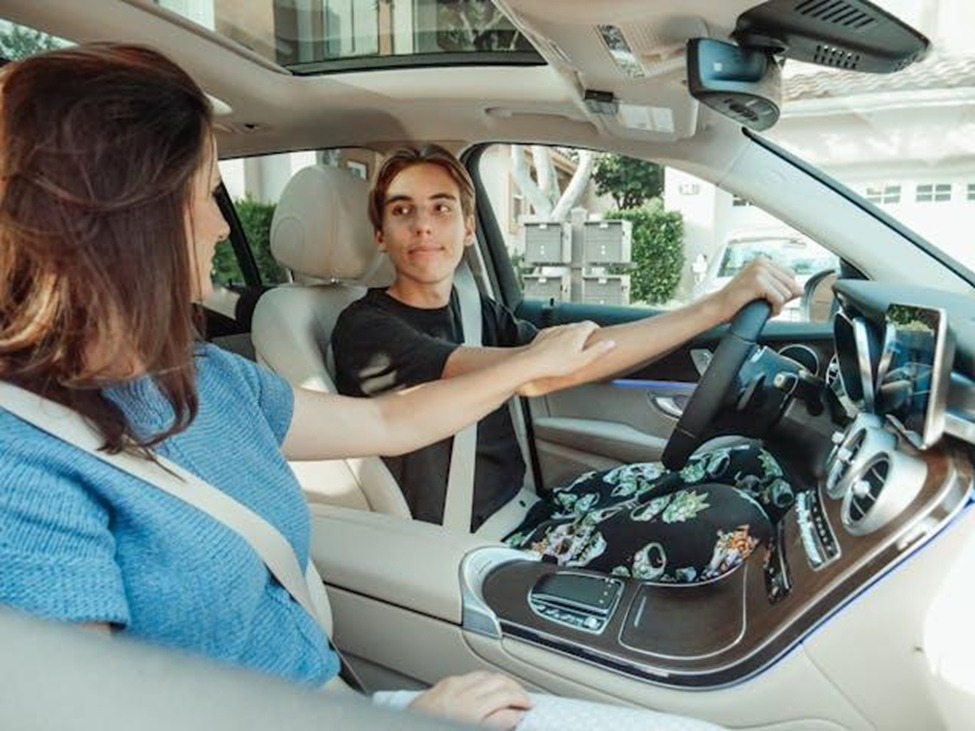
Distractions and peer influence can significantly impact teen driving safety. Addressing these factors proactively helps your teen make responsible choices behind the wheel.
Managing Distractions
Encourage your teen to keep their phone out of reach while driving and to set up GPS or music playlists before starting the car. Remind them that California law prohibits drivers under 18 from using electronic devices while driving.
Navigating Peer Pressure
Discuss scenarios where friends may encourage risky behavior, such as speeding or ignoring traffic laws. Equip your teen with strategies to assertively decline and prioritize safety over peer approval.
Utilizing Monitoring Tools
Consider using apps or devices that monitor driving behavior, providing feedback on speed, braking, and phone usage. These tools can help reinforce safe driving habits and open discussions about areas for improvement.
When and Why to Choose a Professional Driving School
Enrolling your teen in a professional driving school offers structured education and practical experience that complement parental guidance and is required by law. Trained instructors provide comprehensive instruction tailored to new drivers' needs.
Advantages of Formal Training
Professional driving schools offer a curriculum aligned with California's licensing requirements, covering both theoretical knowledge and practical skills. Instructors provide objective feedback and teach defensive driving techniques essential for safe driving.
Course Options
Driving schools typically offer a combination of classroom instruction and behind-the-wheel training. These programs ensure that your teen gains a thorough understanding of traffic laws and develops the skills necessary for various driving conditions.
Test Preparation and Confidence Building
Professional instruction prepares your teen for the driving test by familiarizing them with the test format and expectations. Regular practice under supervision builds confidence and reduces test anxiety.
Testimonials and Success Stories
Many parents and teens have found that professional driving instruction significantly enhances driving skills and safety awareness. Positive experiences and successful outcomes underscore the value of investing in quality driver education.
Ready to ensure your teen becomes a safe and confident driver? At Bond Driving School, we specialize in comprehensive driver education tailored for teens. Our experienced instructors are committed to providing the highest quality training to prepare your teen for the road ahead. Contact us today to learn more about our programs and enroll your teen in a course that sets the foundation for a lifetime of safe driving.